
Portrait 05 of 15
Sue
Ageing with Dignity and Agency
she/her · 76 · Yugambeh Country (Beenleigh), QLD
Aged care · Dignity
She’s planned her funeral down to the Katy Perry song. She just wants the system to let her do it her way.
Sue is 76, fiercely independent, and deeply prepared for the end of her life - on her own terms. What she didn’t prepare for was a care system that assumes families will absorb the complexity, requires digital literacy to access basic support, and routinely makes help harder to reach the more you actually need it. Her portrait reveals how aged care policy, designed for an earlier era, is quietly eroding the agency of the generation it was built to serve.
Through Sue’s eyes
Sue (she/her), 76 | Yugambeh Country (Beenleigh, Queensland)
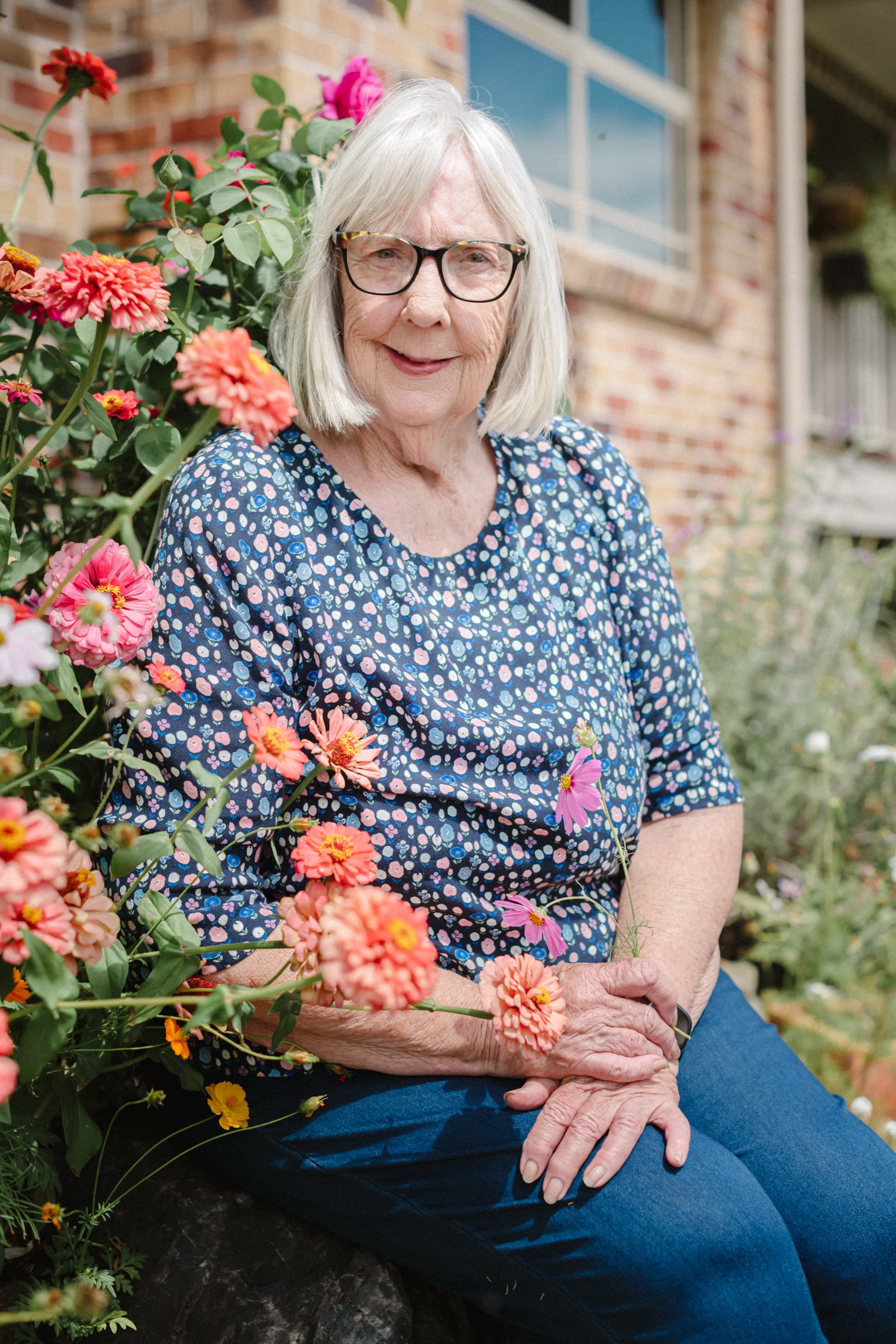
Sue is 76 and planning her funeral down to the song. “We are going to have that Katy Perry song. I’m going up in a firework,” she declares. “I’ve organised my funeral. I’d be very cross if someone else chose different things to me.” She began planning it years ago after a battle with cancer. She wants her farewell to reflect the life she lived. “How you die is sometimes how you will be remembered, and I don’t want to be remembered for being sad and depressed.”
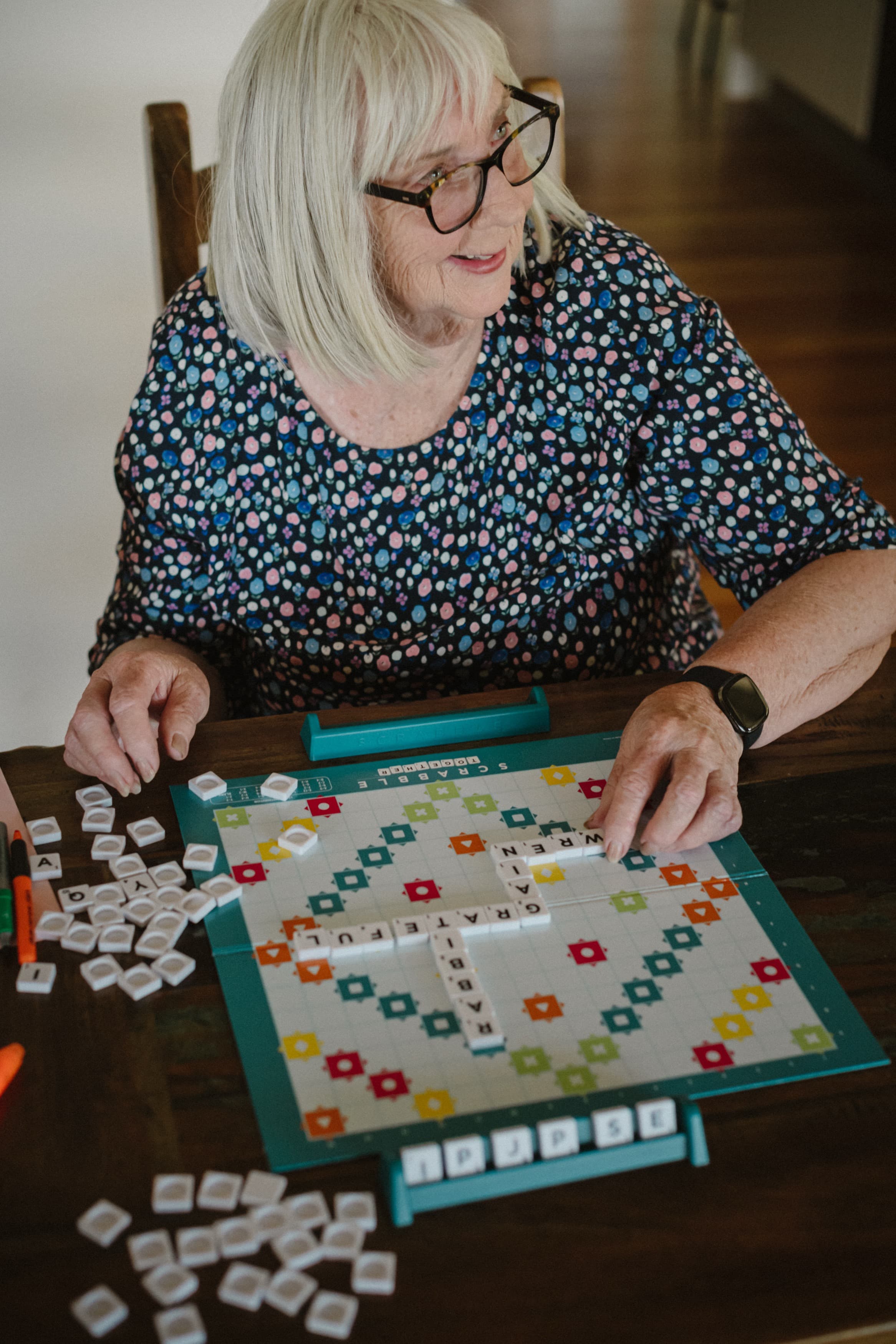
She is not afraid of death. What troubles her are the years between now and her final day, where choice slips through the cracks of systems meant to support her. She believes people thrive when they have agency and falter when it is taken away. Her life is evidence of this. As a teacher, she transformed “difficult” students by giving them control over their environment. When a stroke robbed her of speech, she rebuilt it tile by tile. “I got out the Scrabble tiles and taught myself how to speak all over again.”
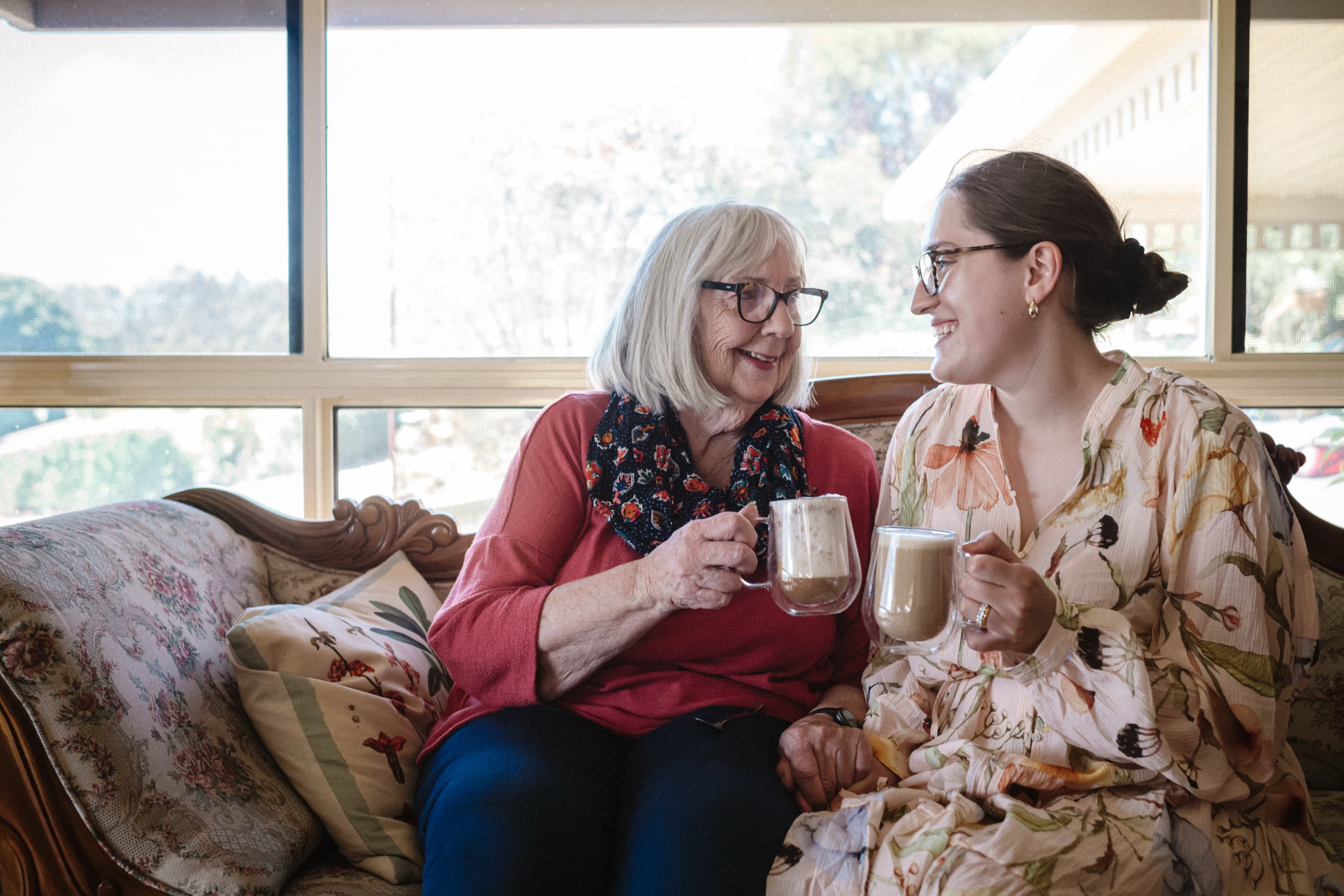
Sue now lives with dementia, which erases conversations almost as soon as they happen. “After you go, I won’t remember what we’ve said.” It is one more reason she holds onto agency wherever she can and avoids support groups that drain her optimism. She is also aware of the safety net around her. Strong intergenerational relationships allow her to stay supported while continuing to make her own choices, softening fears that many others carry as they live with dementia.
Her concerns sharpen when she looks beyond her own circumstances to those whose networks cannot bridge the gaps in the system. A friend in her eighties has been waiting three years for a home care package. After a fall, she lay on the floor for five hours until her son returned. “She was left there in pain,” Sue recalls. For many, long waits for higher-level home care become a harm of their own.
Then there is the digital wall: the closed bank branch, emails lost through corporate mergers, and password recovery paths that take three generations of her family to unravel. “A lot of the oldies don’t have access or can’t use a computer. Without children or grandchildren, I’d be absolutely lost.” These small hurdles collect across a week, then a month, then a year. A printed bank balance, a smartphone purchased only to reach services that once arrived by post, each one nudging independence a little further away.
Sue notices how often support is organised without the people it is meant to serve in mind. Help is arranged through portals, office hours, and administrative mazes instead of how people live their day-to-day lives. “Bring help to the people,” she says. “Approaches of doctors or political representatives saying ‘My door is always open’ won’t do.” She has, however, seen glimpses of something more humane. Her local MP once held a community information day at a nearby school. “All the service people in one spot. Nothing for sale, just information.” For once, she did not have to chase anything. The system came to her.
Sue’s story is ultimately about designing a world that treats dignity as a daily condition. She knows ageing and death are part of life. What unsettles her is a system that makes people shrink before their time, because dignity is shaped as much by the small choices of an ordinary day as by the final moments that follow.

The policy trajectory of aged care
Sue’s story reflects an aged-care system designed for shorter lifespans, stable family support, and relatively simple services. Today, it operates under very different conditions: longer lives, greater cognitive variability, and increasingly digital access to care. Policy settings emphasise efficiency, standardisation, and individual self-navigation, shifting responsibility onto people precisely when their capacity to manage complex systems often declines. Delays, fragmented pathways, and administrative burden narrow everyday choices and reduce practical independence. Families step in to bridge these gaps, absorbing time pressure, financial strain, and emotional labour. What appears efficient in the short term can accelerate loss of agency and increase long-term system demand.
The potential of future generations policy to intervene
A future generations policy lens shifts aged-care design toward preserving agency earlier in the life course. Investing in prevention, continuity of support, and accessible system design can reduce avoidable decline and stabilise care needs over time. These settings increase the likelihood that autonomy, participation, and trust remain intact as people age, supporting care arrangements that remain viable for older Australians and for the generations who support them.
Policy landscape
Today's policy landscape: The infrastructure for an aging population
Australia’s population is ageing rapidly, yet the systems designed to support older Australians have not kept pace. By 2056, nearly 9 million Australians will be over 65, compared with 4.2 million today. When the Aged Care Act 1997 (Cth) was introduced, it assumed shorter lifespans, larger families, and lower rates of chronic disease. Those conditions no longer hold. The system now operates in a context of longer lives and more complex care needs, yet it remains organised around provider efficiency rather than continuity of support across extended lifespans.
Life expectancy now reaches 81.1 years for men and 85.1 for women, lengthening the period during which many people rely on stable care and health services. At the same time, family structures have shifted. The average household has declined from 3.6 members in 1961 to 2.5 in 2021, reducing the pool of unpaid carers on which the system once depended. Chronic illness is more common and more complex, with the number of conditions per person rising with age. Meanwhile, the ratio of working-age Australians to retirees has fallen from 7.4 in the 1970s to a projected 3.2 by 2055. These shifts expose a widening gap between demographic reality, clinical need, and the design of Australia’s aged-care infrastructure, transferring care responsibilities and financial pressure onto younger generations.
The strain is visible in the workforce that sustains the system. More than 1.5 million Australians currently receive aged care, and the sector will require 130,000 additional workers by 2050. Yet workforce instability remains high, with annual turnover exceeding 1 in 4 workers and persistent dissatisfaction with pay and conditions. Insecure employment and high churn undermine continuity of care, increase reliance on unfamiliar staff, and weaken the relationships that uphold trust and personal agency. Without sustained investment in wages, skills, conditions, and new service models, today’s workforce shortage risks becoming tomorrow’s unmet care need. Expanding community-based approaches, including local hub-and-spoke models that connect formal services with neighbourhood support and intergenerational participation, may offer more resilient pathways.
Less visible barriers further shape how older Australians navigate care. Digital-first service design, including reliance on the My Aged Care portal, assumes levels of digital literacy that many older Australians do not possess. Fewer than 60% of Australians aged 50-65 can reliably assess information online, and among those 70 and above, 75% are digitally disengaged. For people without strong family or community support, this translates into practical exclusion from essential services.
Planning for later life also remains limited. Around 70% of Australians aged 65 and above have no advance care plan, and access to palliative care remains uneven, particularly in regional areas. Low rates of intergenerational housing, especially compared with many European countries, leave many older Australians socially isolated from the family networks that often support care and planning.
These pressures weaken agency and preparedness across the life course. When care systems are technologically inaccessible or culturally sidelined, older Australians lose meaningful control over their later years. At the same time, younger generations inherit arrangements shaped by avoidance rather than capability. The result is an ageing infrastructure that struggles to deliver dignity, continuity, and sustainability across generations.


The value of a future generations approach
When support pathways are complex or delayed, everyday decisions become harder to make. Functional independence declines incrementally, needs escalate, and responsibility shifts to families, informal carers, and future public expenditure. Administrative efficiency in the short term can therefore turn manageable support needs into acute care episodes, increasing fiscal cost, caregiver strain, and loss of personal agency over time.
A future generations policy approach redesigns aged-care systems to protect agency earlier in the life course. Prioritising early support, continuity, and navigable access allows policy to intervene before people cross into higher levels of dependency. Timely, life-aligned assistance enables older Australians to retain control for longer while moderating downstream demand for intensive services and stabilising care trajectories.
Examples from other countries show that different care architectures are possible. In the Netherlands, the Buurtzorg model organises home care around continuity and local autonomy, using small self-managing teams to sustain trust, professional judgement, and relational knowledge over time. This approach reduces long-term service intensity while maintaining strong community-based care. In Kerala, community-based palliative care integrates planning, shared responsibility, and support well ahead of crisis points, strengthening preparedness across households and neighbourhoods.
Future Generations Policy Analysis
A future generations policy lens brings the leverage point into focus. Design choices that provide timely, continuous support can stabilise agency earlier in the ageing process. When systems deliver help before needs escalate, people retain independence for longer and demand for crisis-driven care declines. When support arrives too late, care shifts toward emergency responses, transferring higher costs and responsibility to the generations that follow.
Case Study: The Aged Care Act 2024 and Support at Home program
The Aged Care Act 2024, which commenced in November 2025, represents the most significant reform of Australia’s aged-care system since 1997. Introduced alongside the Support at Home program, the legislation responds to the Royal Commission into Aged Care Quality and Safety, established in 2018, which called for a system grounded in dignity, accountability, and stronger protections for older Australians.
Despite these reforms, Australia’s care architecture remains institutionally divided. The Commonwealth funds and regulates aged care, while state governments oversee health services, creating coordination gaps that older people experience as fragmented support across medical care, home services, and long-term care.
The previous legislative framework primarily organised funding around providers rather than the people receiving care. The Aged Care Act 2024 signals a shift in intent by recognising older people as rights-holders within the system and framing care around dignity, choice, and respect. This represents an important conceptual change, raising the question of whether formal rights can translate into genuine agency in everyday care experiences rather than remaining procedural entitlements.
The impact of the reform will depend on implementation. Structural constraints persist, including rigid service pathways, delays in access to home support, and ongoing workforce instability. While the Aged Care Act 2024 and the Support at Home establish a strong foundation for dignity-centred care, the absence of clear indicators for agency and timely service delivery risks leaving rights recognised in legislation but unevenly realised in practice.
Fairness dimensions
Life stage equity
Aged-care systems that require high coordination and self-navigation place the greatest burden at life stages marked by declining health, cognition, and confidence. Delayed support accelerates loss of independence, disrupting key ageing transitions and leaving future cohorts more likely to enter care later, with higher needs and fewer choices.
Distribution across and within generations
Formal provision implicitly assumes the presence of unpaid family coordination, which quietly redistributes responsibility toward those considered default caregivers, embedding unequal ageing outcomes based on household capacity rather than public design. What appears as individual coping is a structural transfer of care labour forward.
Future opportunities and path dependency
Delayed engagement with support normalises crisis-entry pathways, locking the system into managing advanced needs and reducing future governments’ ability to rebalance toward prevention without absorbing significant transition costs.
Proportionate and justified trade-offs
Short-term fiscal restraint is achieved by limiting coordination, navigation, and early access. The hidden trade-off is higher downstream demand, greater workforce intensity, and rising informal care burden, costs that are deferred rather than avoided and inherited by future systems and families.
Precautionary approach
The system responds once decline is visible but does not act at early thresholds where small interventions would prevent irreversible dependence, narrowing the range of dignified ageing outcomes available to current and future cohorts.
Our opportunity to shape Australia’s future
As Australians live longer and family support becomes less available, system design carries greater consequences. Sue’s story highlights a recurring pattern: agency rarely disappears all at once. It erodes when assistance arrives late and access depends on navigating complex procedures at the very moment people’s capacity to do so is declining. Manageable support needs then escalate into intensive care, leaving future cohorts with systems that are harder to navigate, more expensive to sustain, and less effective at preserving choice.
Two possible futures
A future of abandonment and lost agency
It’s 2040, and the aged care crisis Sue once feared has unfolded into a normalised form of rationing. Home care package waitlists now stretch beyond five years. Residential care facilities remain chronically understaffed. Workers rotate constantly, paid too little to stay and asked to carry workloads too heavy to endure. Continuity of care has largely disappeared, and with it the trust that makes agency possible.
The digital divide has become a barrier to basic support. Most government services moved fully online during the 2030s, and face-to-face assistance steadily disappeared. Older Australians who cannot use digital tools, have no tech-capable relatives, or cannot afford devices and connectivity struggle to access services they are entitled to receive. Many stop trying. Some never receive the support they spent years waiting for.
Needs escalate because help arrives too late. Falls that could have been prevented become disabling injuries. Dementia care remains uneven and tightly means-tested, forcing many people to sell assets to secure assistance. Families sell homes to fund care, then confront the insecurity that follows. Responsibility shifts to whoever can absorb it, most often women, usually unpaid, and frequently exhausted.
The emotional cost spreads across generations. Adult children juggle work, parenting, and caregiving with little respite. Relationships strain under constant administrative burden and the grief of watching capability decline faster than it needs to. Younger adults organise their lives around anticipated care obligations, delaying savings, postponing milestones, or avoiding commitments they fear they cannot sustain.
By 2040, the intergenerational contract has begun to unravel. Ageing no longer carries an expectation of dignity. Australians now expect to struggle. Systems that once promised security now pass forward obligation, and the failure to protect agency earlier in life leaves each generation with less capacity to care well for the next.
A future of dignity and agency
It's 2040, and Sue’s great granddaughter, Lily, is in her twenties. When she thinks about ageing, she imagines a society that began protecting agency much earlier in life so that autonomy remains ordinary rather than exceptional.
Support now arrives quickly. Home care packages are allocated within weeks. Every community has a regional hub, often co-located with libraries and health centres, where trained navigators help older people access services in person or online. No one is left alone to decipher portals, forms, and eligibility rules. Care is organised around daily life instead of administrative convenience.
Digital systems exist, but they do not replace human contact. Banks and government services maintain assisted pathways by default. People can set up accounts, recover passwords, and verify information without relying on children or grandchildren to translate the system. This prevents the small losses of autonomy that once gradually turned into dependence.
Care is relational and continuous. Workers stay long enough to be known and trusted. Memory cafés and dementia-friendly programs are widely available, helping people live well while preserving choice. Falls rarely become hours on the floor. Community responders, care teams, and neighborhood support networks coordinate closely, allowing help to arrive quickly through relationships already in place.
Death is discussed openly and early. Schools introduced end-of-life planning as part of civic literacy, and families now speak about wishes without taboo. Palliative care expanded across regions, allowing people to choose where they spend their final chapter: at home, in hospice, or within familiar community settings.
By 2040, dignity is no longer dependent on having strong family networks. It is built into how the system operates. When people reach the end of their life, they can still “go out like a firework,” because the system is designed to protect and honour their agency all the way through.




Go deeper