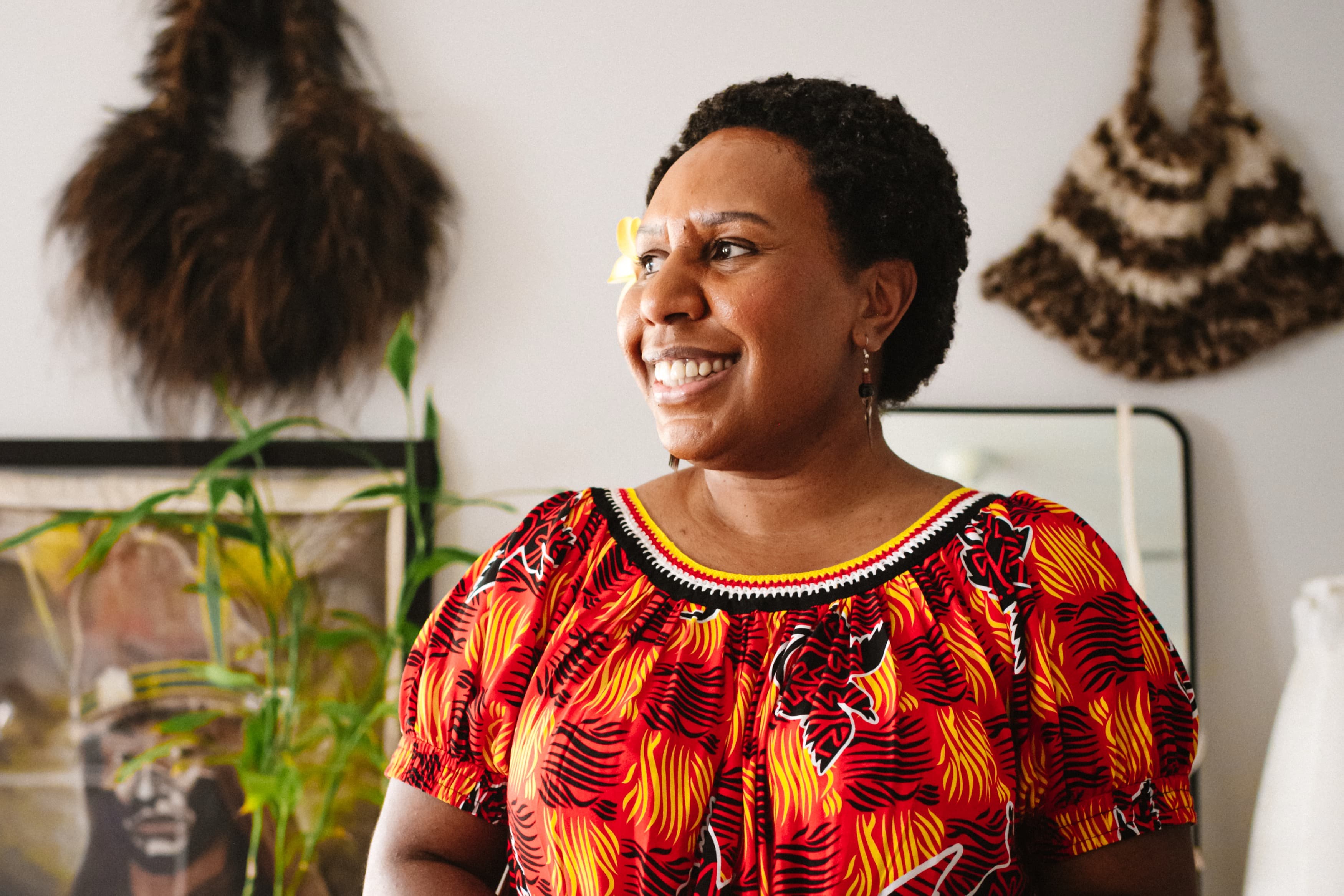
Portrait 14 of 15
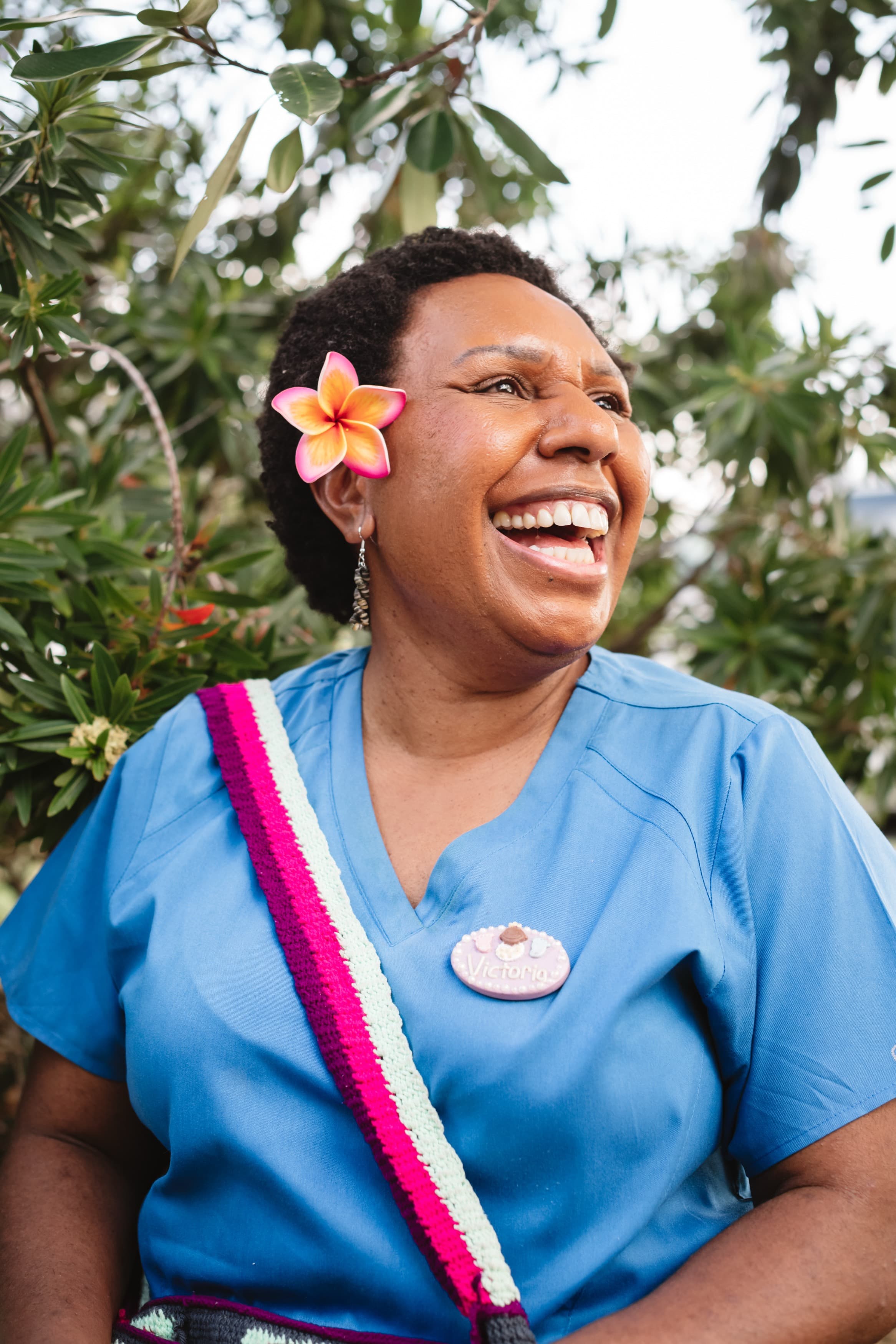
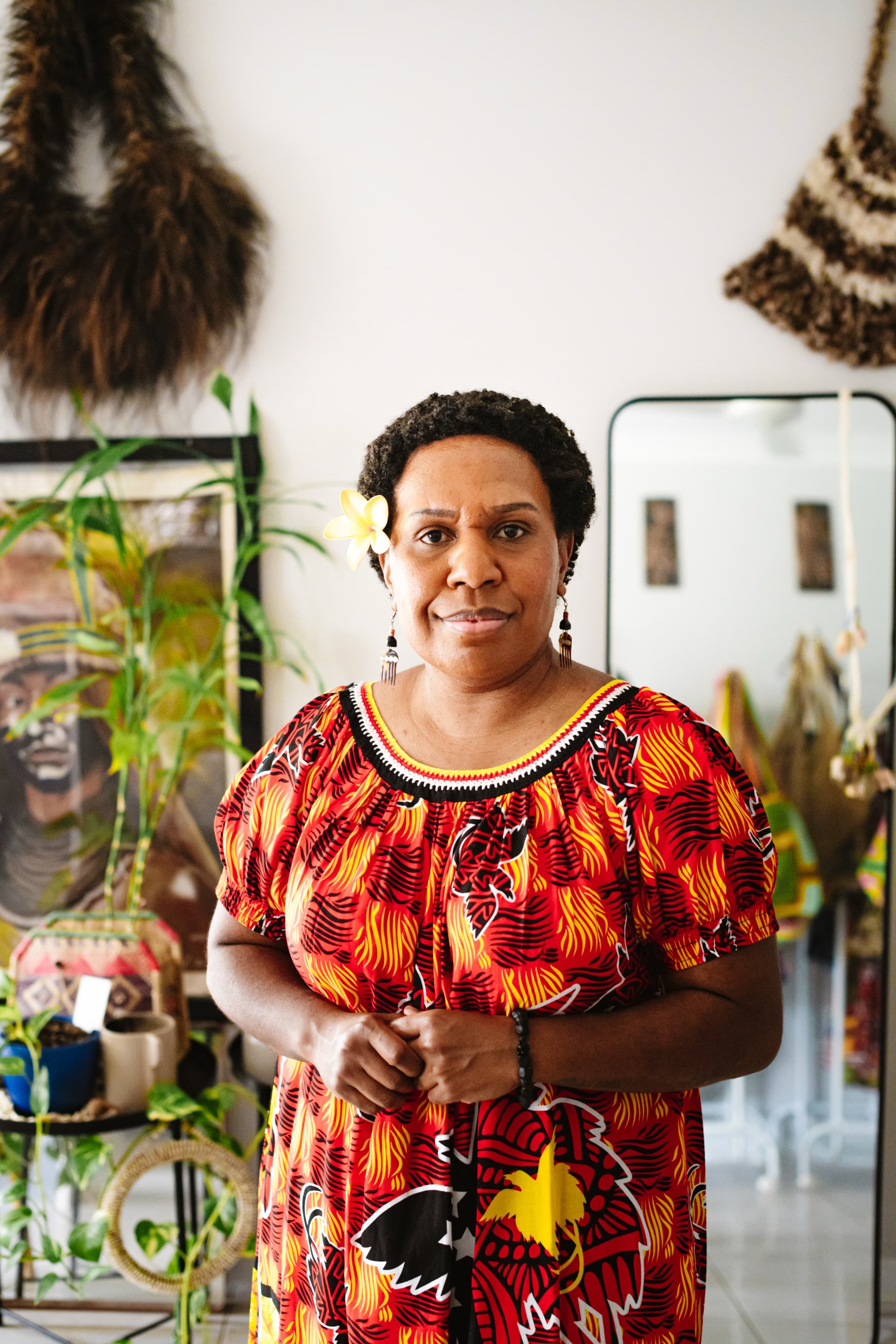
Victoria
Reframing Mobility as a Regional Asset
she/her · 33 · Gubbi Gubbi/Kabi Kabi Country (Moreton Bay), QLD
Pacific migration · Regional partnership
What do we owe future generations as one big Pacific family?
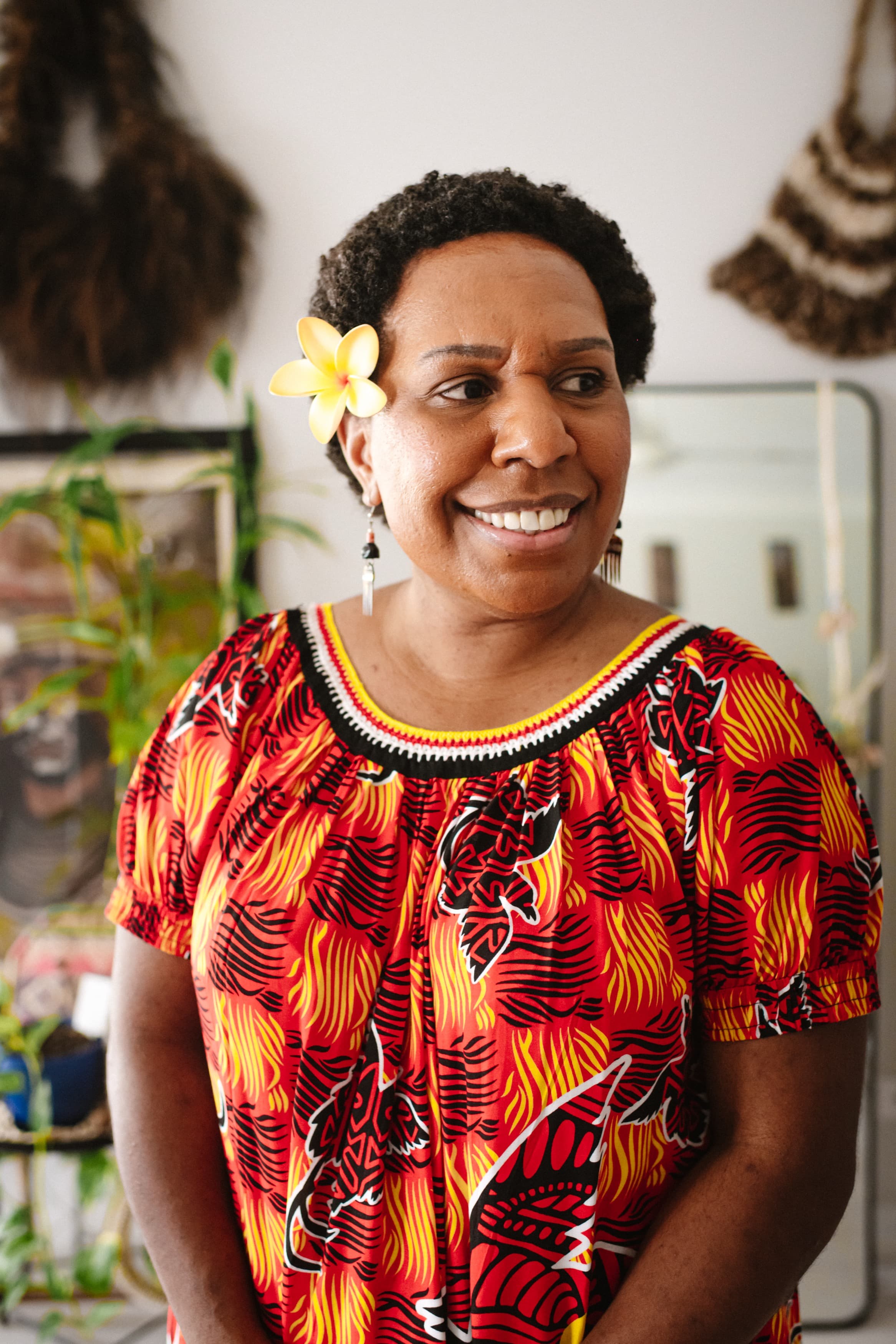
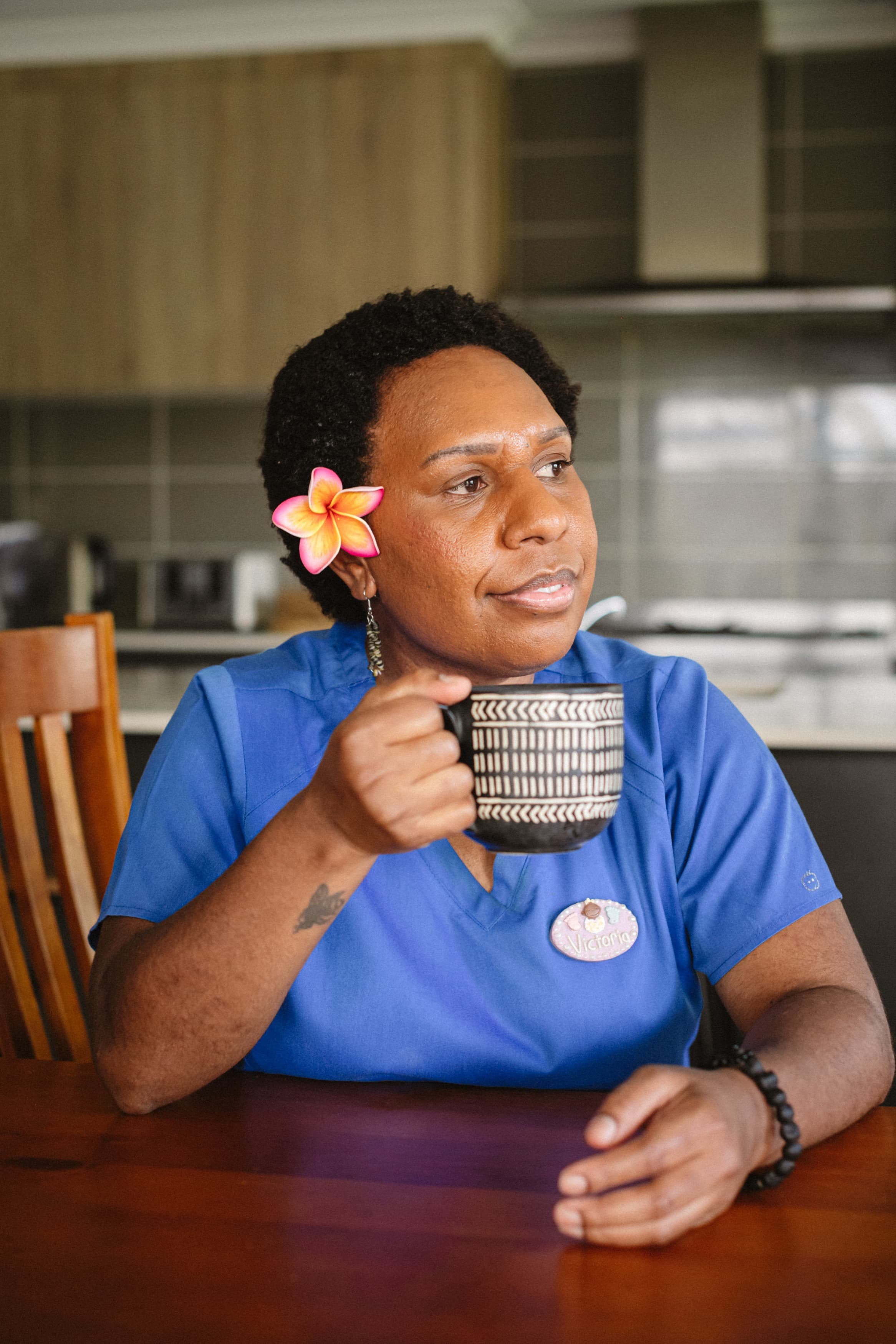
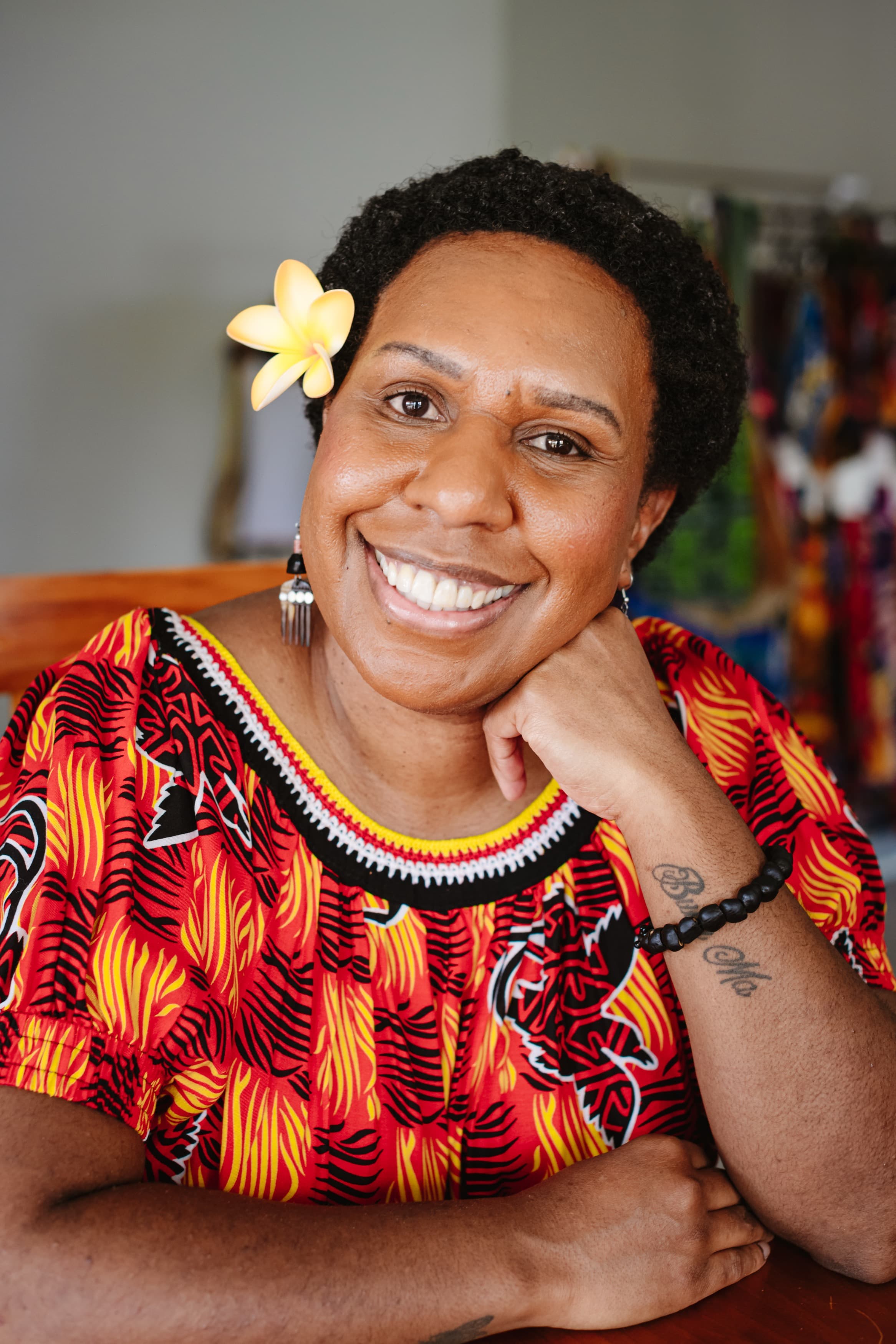
Victoria is a nurse midwife who crosses two worlds every time she leaves her house - her PNG home and her Australian home. She carries the memory of what happened in 1975 when PNG’s independence left thousands of people with Australian lives but no Australian citizenship. Today she watches a migration system built around labour extraction rather than the reciprocal partnership that shared history demands. Her portrait asks what Australia owes its Pacific neighbours - not as a geopolitical calculation, but as a reckoning with the relationships we inherited and the ones we are building for future generations.
Through Victoria’s eyes
Victoria (she/her), 33 | Gubbi Gubbi/Kabi Kabi Country (Moreton Bay, Queensland)
Victoria’s life unfolds on a border most Australians rarely notice. “When I leave my house I leave my Papua New Guinea (PNG) home and enter my Aussie home,” she says. The shift is quick and constant, shaped by a history many have forgotten. The distance is only a doorway wide, yet it holds a century of lingering grievances.
For decades, Papua and New Guinea were administered by Australia. Their people held Australian citizenship and moved across the Torres Strait under treaty and kinship rights. As the fiftieth anniversary of PNG’s independence approaches, Victoria sees little public reflection on what that shared past still demands. “I want to see a documentary that asks people what it was like in August 1975 when people had to leave PNG,” she says. “What happened to all those ‘Australian citizens’ that now weren’t citizens of anywhere?” The border moved. People did not. Many who had lived, worked, or served Australia found themselves suddenly unanchored, with no citizenship on either side.
Her own family arrived in Adelaide in 2004, unfamiliar with the systems around them. They relied on one another and the local PNG community. “That’s how we survived,” she says. “You can get lost if you don’t know who you are.” Later she moved to Brisbane to be closer to PNG and to her grandmother, trying to preserve threads of belonging across distance. Yet the separation between the two countries still feels wide, shaped less by geography than by cultural amnesia. “People in Queensland don’t even know who South Sea Islanders are today.”
Now thirty-three, Victoria works as a nurse midwife and runs a small business with her mother and sister. Her professional life adds weight to the bridge she carries. She notices how rural Queensland and Port Moresby echo each other in what families hope for: the safe arrival of the next generation. Yet the conditions surrounding that hope differ. In both places, women travel long distances in labour and arrive at clinics stretched beyond capacity, while cultural expectations determine who seeks care early and who waits until the danger becomes visible. The need is shared. Capacity is not. She imagines what genuine partnership could look like: PNG’s ingenuity in remote health informing Australian models, and Australia’s training systems strengthening PNG’s workforce. Knowledge moving in both directions.
Migration policy rarely supports this vision. “They don’t make it easy unless you’re in mining,” she says. Relatives have had visitor visas denied despite complete applications. Pathways such as the Pacific Engagement Visa stall for lack of employers willing to participate. Programs like PALM prioritise labour placement before family or community needs are considered. “The whole process is trial and error. Why are we so reactive? Diaspora voices could help get this right.” For Victoria, these frustrations sit within a colonial relationship that was abruptly severed and never fully reckoned with.
This history meets her again as she prepares to become an aunty, both within her family and in the cultural sense of stepping into Elder responsibility. She will guide younger generations through identities shaped by distance, memory, and belonging. “I’ll be in charge of making sure everyone is OK.” The role requires more than remembrance. It needs systems that recognise and support the bridges people like her already carry.
Her question is direct. “What do we owe future generations,” she asks, “as one big Pacific family?” It is an invitation to reckon with shared history and to design mobility that reflects it.
The policy trajectory of international engagement and migration
Victoria’s story illustrates a migration system configured to fill immediate labour gaps, with limited attention to the long-term regional relationships migration creates. Policy settings prioritise speed, flexibility, and compliance control, moving people across borders faster than trust, family stability, and institutional learning can take root. Employer-led schemes concentrate decision-making at the point of placement, leaving Pacific skills and leadership under-recognised while families face repeated disruption. Frequent policy resets fracture continuity and weaken regional confidence. The system delivers labour supply, yet sidelines reciprocity and civic connection. Migration is treated as a transactional input even though it reshapes trust, belonging, and regional partnership across generations.
The potential of future generations policy to intervene
A future generations policy approach defines mobility as a contributor to regional capability instead of a temporary labour instrument. It aligns migration, foreign policy, and development strategies around continuity and shared responsibility. Long-term pathways allow relationships, skills, and institutional trust to deepen across borders. Programs designed with Pacific leadership and two-way learning embed mobility within regional social infrastructure. Migration then strengthens families, public institutions, and cross-border partnership, supporting a region defined by enduring connection rather than repeated turnover.
Policy landscape
Today's policy landscape: Migration and regional resilience in the Indo-Pacific
Australia’s relationship with Papua New Guinea (PNG), once defined by shared citizenship and movement across the Torres Strait, still carries the imprint of an unresolved colonial transition. Yet migration policy continues to prioritise short-term labour supply over the long-term regional relationships that define the Indo-Pacific.
Early migration laws such as the Immigration Restriction Act 1901 and the Pacific Island Labourers Act 1901 treated Pacific mobility as labour supply rather than civic connection. These frameworks established patterns that privileged extraction over permanence. Variations of this logic remain visible today. Australia is home to more than 7.6 million migrants, yet temporary and employer-sponsored visas dominate migration pathways. Temporary migrants now comprise roughly 11% of the workforce, offering flexibility for employers while leaving many workers in precarious conditions.
Evidence of systemic vulnerability continues to surface. Investigations have revealed widespread underpayment and exploitation across temporary migration programs, exposing how poorly regulated schemes weaken labour standards and erode public trust and can contribute to high workforce turnover. Skills fail to settle within workplaces and communities, integration remains shallow, and risk concentrates among workers with the least bargaining power.
These dynamics shape the wider region as well. One-way labour flows draw skilled workers from Pacific economies while increasing Australia’s reliance on temporary labour. The relationship becomes transactional rather than reciprocal.
The Pacific Australia Labour Mobility (PALM) program illustrates these tensions. Introduced in 2022 to address labour shortages in agriculture, aged care, and hospitality, the scheme fills immediate workforce gaps. Yet evaluations highlight uneven worker protections, slow enforcement, and family separation across Pacific communities. Without stronger pathways for skills recognition, mobility, and permanence, labour mobility remains disconnected from broader regional capability-building.
The value of a future generations approach
Australia’s migration and international engagement settings shape how relationships in the region are built and sustained. When mobility operates mainly as a short-term labour response, movement outpaces the formation of trust, skills exchange, and civic connection. Families face repeated separation. Pacific expertise remains underused in both origin and destination contexts. Confidence in regional partnership weakens as mobility functions more as labour supply than shared regional development.
A future generations policy approach positions mobility as long-term social and institutional infrastructure. It asks whether migration pathways, foreign policy settings, and development programs support stable family life, reciprocal learning, and durable civic ties across borders. When mobility supports skills circulation, family stability, and two-way knowledge exchange, it strengthens regional security, institutional resilience, and strategic alignment. When policy relies on temporary status and fragmented rights, labour supply is delivered while deeper regional capability remains underdeveloped.
International experience shows how this orientation can translate into practice. The African Union’s Free Movement of Persons Protocol links mobility to regional integration by enabling residence, work, and establishment across member states, supporting sustained economic and institutional ties. In the Pacific, Migration with Dignity frameworks position mobility within broader resilience strategies, coordinating migration, education, and development policy to support community stability, skills transfer, and continuity across borders.
Future Generations Policy Analysis
A Future Generations Policy Lens on the Subclass 192 Pacific Engagement Visa
Case Study: The Subclass 192 Pacific Engagement Visa
Legislated in 2024, the Pacific Engagement Visa (PEV) creates up to 3,000 permanent migration places annually for Pacific nationals through a ballot-based system. The visa bypasses traditional points tests and occupation lists, widening access beyond income thresholds, formal qualifications, or employer sponsorship. By offering permanent residency rather than temporary placement, the program signals a shift toward family stability and longer-term settlement pathways.
The design begins to shift the logic of mobility away from short-term labour supply toward shared human-capital development. Permanent status enables families to remain together and allows skills, social networks, and institutional trust to deepen over time.
Its long-term impact, however, will depend on implementation. Transparent ballot administration will be needed to ensure equitable access. Settlement services must account for extended Pacific family structures. Education and skills programs will also need to support two-way learning and capability exchange. The PEV introduces an important structural change, but on its own it does not transform the wider migration system that shapes regional mobility.
Fairness dimensions
Life stage equity
Working-age-centred eligibility disrupts family continuity and caregiving networks, shifting future costs to health, aged-care, and community systems.
Distribution Across and Within Generations
Ballot-based access and cost barriers consolidate opportunity within established networks, narrowing who shapes future regional collaboration.
Future Opportunities and Path Dependency
Permanent migration pathways stabilise mobility but risk hardening early design assumptions without periodic review, leaving future governments with frameworks calibrated to past demographics and labour needs.
Proportionate and Justified Trade-offs
Administrative simplicity today transfers coordination and settlement pressures forward, resulting in dispersed responsibilities across agencies and higher baseline delivery costs for future administrations.
Precautionary Approach
Permanent migration pathways reduce instability and uncertainty in regional relationships, supporting long-term trust. However, without built-in review points, policies lack systematic risk scanning, early-warning indicators, and adaptive triggers to respond to emerging demographic, climate, or security shocks.
Our opportunity to shape Australia’s future
Australia’s migration and regional engagement settings are currently calibrated to address short-term labour and mobility needs. When visas limit duration, rights, and pathways to permanence, relationships restart again and again. Families remain separated. Skills circulate only briefly. Regional confidence weakens as mobility functions as labour supply rather than shared regional development. Future Australians risk inheriting a neighbourhood defined by short-term exchange instead of durable cooperation.
A future generations policy approach reframes mobility as a long-term capability system. It asks whether migration pathways support stable families, reciprocal movement, and lasting institutional ties across the region. Policies that enable longer residence, family continuity, and two-way mobility allow trust, skills, and institutional knowledge to deepen through repeated exchange. The central question becomes whether mobility remains organised around short-term extraction or is designed to sustain regional cooperation, workforce resilience, and strategic stability for decades to come.
The two speculative futures below, inspired by Victoria’s story, explore how migration processes and regional stability could diverge by 2040 under continued trajectories or redesigned policy frameworks.
Two possible futures
A fractured horizon
It is 2040, and the doorway has become a wall. Years of rising border anxiety, economic protectionism, and political backlash against migration have slowly closed it. Mobility has tightened as regional bodies fractured and cooperation weakened. Multilateral agreements gave way to ad-hoc arrangements shaped by short-term political interests rather than durable partnership. Each new government pursued visible domestic wins, prioritising immediate optics over long-term regional stability.
Workers still fill critical labour shortages, yet protections and long-term opportunities lag behind. Programs remain transactional, designed to meet short-term needs rather than support mutual development. Diaspora voices are rarely invited to shape policy design. Opportunities for exchange have narrowed, and migration policy has drifted back toward a familiar pattern of extraction, fuelling deep frustration across the region.
In classrooms, history remains selective. Students graduate without learning who once crossed the Torres Strait or who were left stateless in 1975 when the map shifted. Forgetting has become routine. The stories Victoria hoped would be remembered survive mainly in archives and family conversations, never reaching shared public understanding. Younger generations inherit the same disorientation, navigating systems that fail to recognise their histories and connections.
Without the steady movement of people and ideas, labour shortages deepen and innovation slows. Regional trust erodes as neighbours look elsewhere for partnership and support. What began as an effort to control borders has turned caution into separation, leaving Australia less connected and less secure in its own neighbourhood.
A shared horizon
It is 2040, and the Torres Strait has become a shared civic and cultural corridor rather than a checkpoint, a living symbol of cooperation. Movement between Australia and Papua New Guinea (PNG) is routine, shaped by trust rather than suspicion. Families travel for births, funerals, study, and work without months of uncertainty. Mobility is now treated as a regional capability rather than a concession.
This shift began when diaspora leadership moved to the centre of policy design. People who live between worlds helped build health exchanges, shared qualifications, and joint training institutes. PNG’s ingenuity in remote care informed Australian practice, while Australian training systems strengthened PNG’s workforce without drawing it away. Reciprocity became embedded through shared investment, shared standards, and shared responsibility.
In schools, history is taught in full. Students learn the names that once disappeared from the margins and understand what happened in 1975 and why it still matters. Shared memory has become shared literacy, strengthening regional confidence and diplomatic stability.
For Victoria, the bridge she carries is no longer fragile. Institutions recognise the work she does across borders. Children grow up knowing they belong to two places that recognise one another.

Go deeper