
Portrait 15 of 15
Rocket
Transforming Australia's Justice System
she/her · 44 · Larrakia Country (Darwin), NT
Justice system · Incarceration · Reintegration
Her parents met in jail. She went inside more than twenty times. She knows exactly why - and exactly what needs to change.
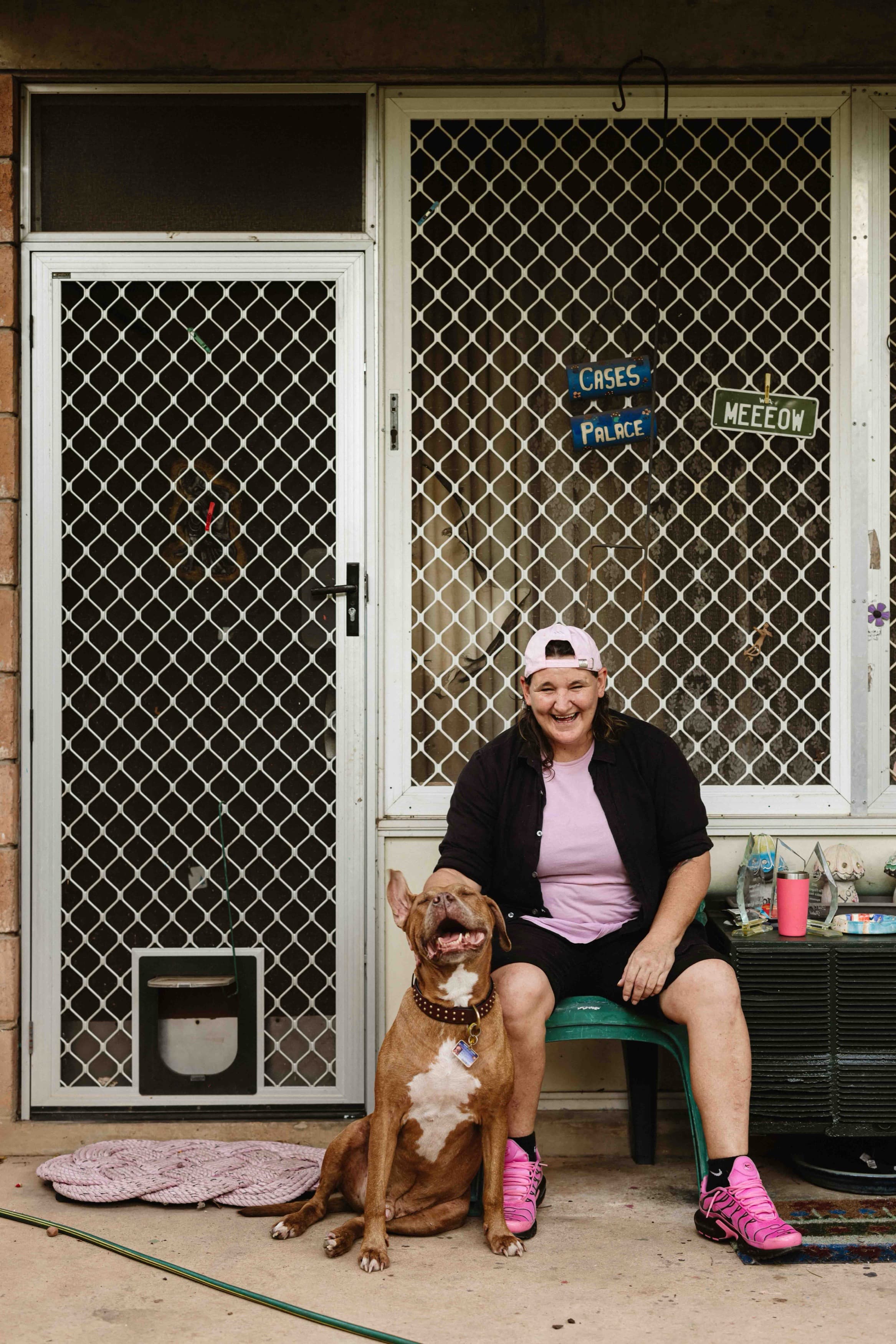
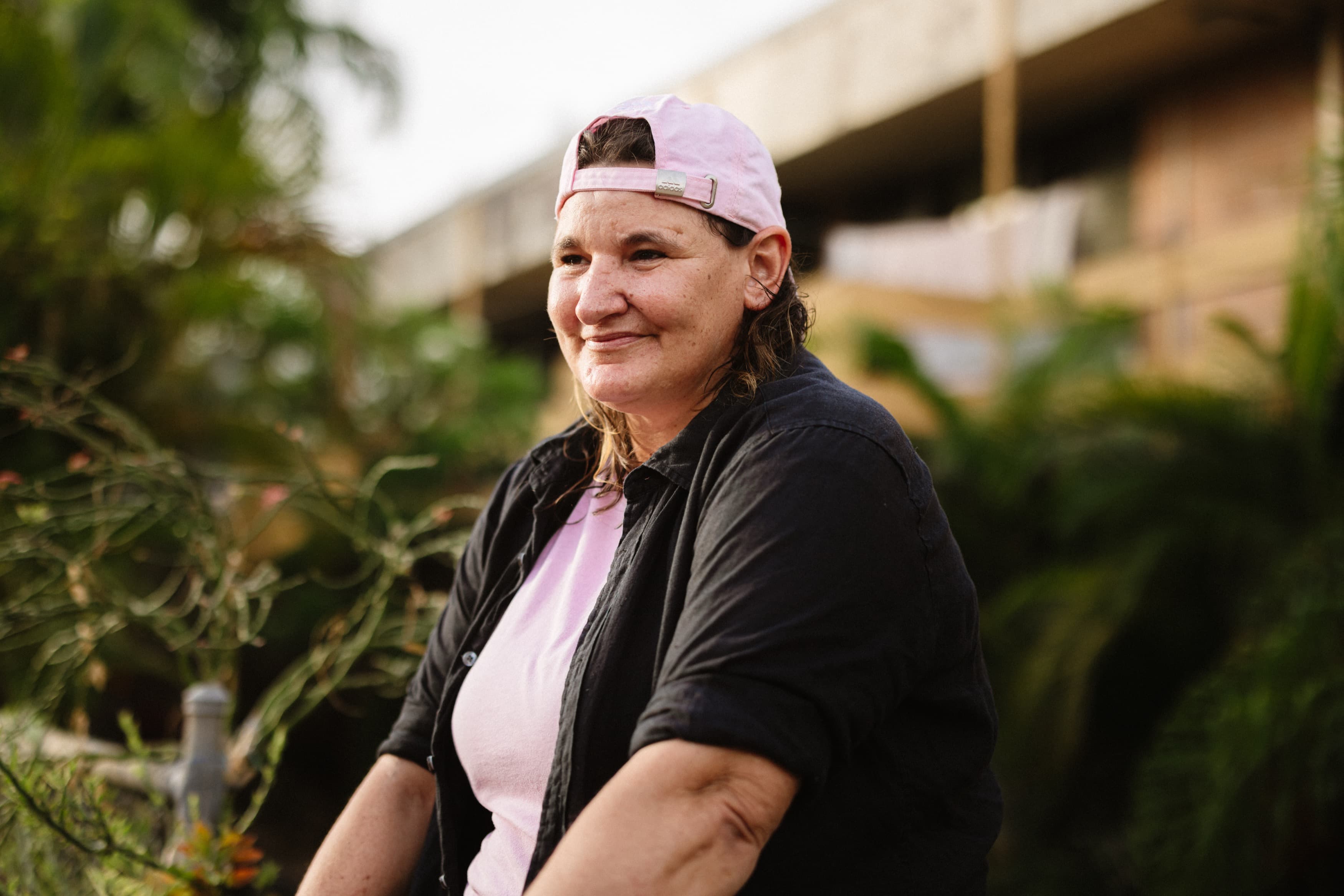
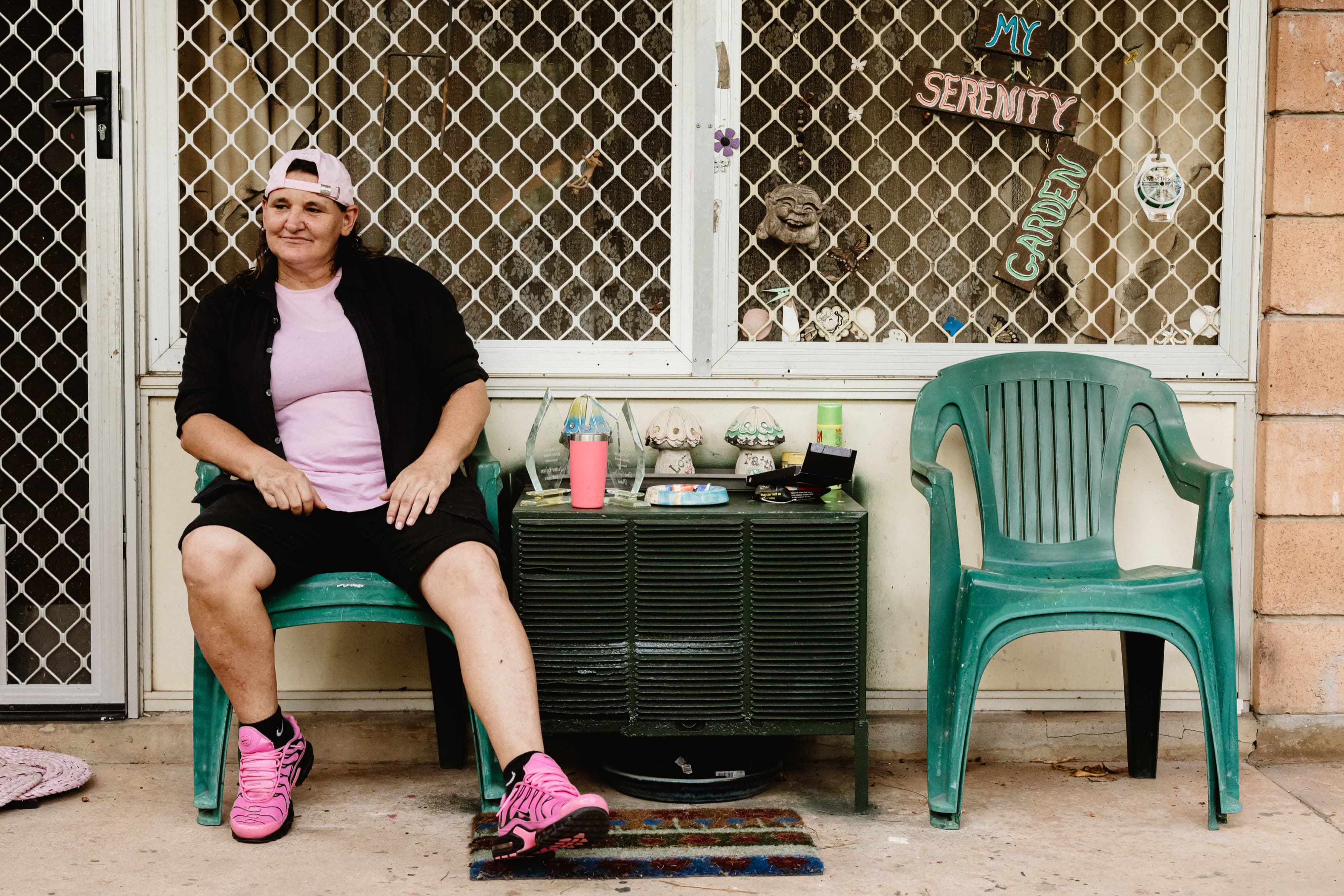
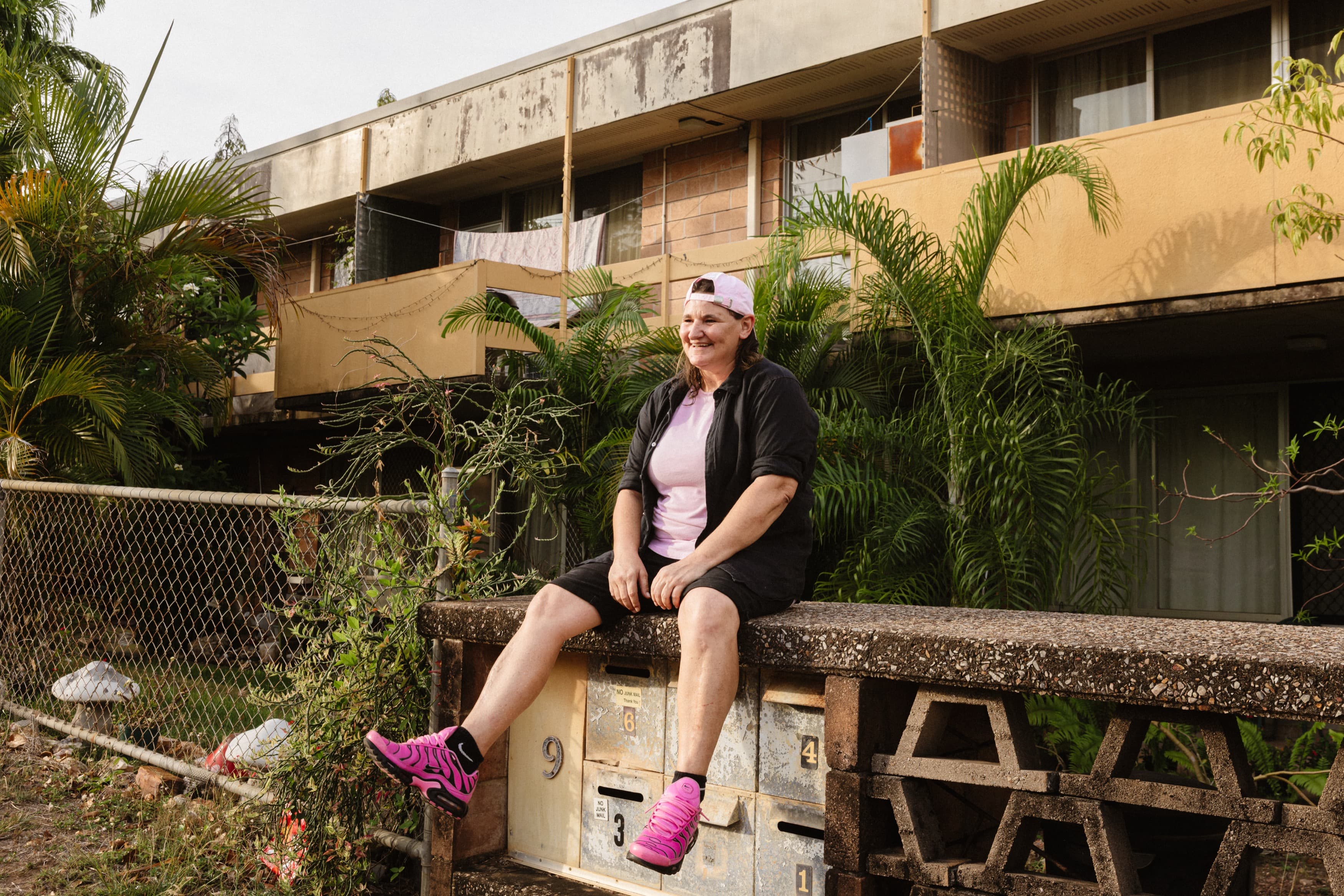
Rocket describes prison plainly: the boredom that breaks your brain, work she calls slave labour, an institution she calls a university - because inside, people learn better contacts and better ways to commit crime. She has been inside more than twenty times and knew, every time she was released, that she would be back. Not because she chose it, but because the system that was meant to stop that cycle was designed to reproduce it. Her portrait - the most unflinching in the collection - examines how Australia’s justice architecture trades short-term control for long-term instability, and at what cost to the children growing up watching the pattern repeat.
Through Rocket’s eyes
Rocket (she/her), 44 | Larrakia Country (Darwin, Northern Territory)
Her relationship with the system began long before she ever entered it. “My parents met in jail. I grew up thinking jail was normal.” The pattern repeated around her. Women she once served time with now have children walking into the same institutions. “The system isn’t broken,” she says. “It’s designed like this.” By her teens, addiction and violence shaped her world more than any support service ever did. By forty-four, she had been inside more than twenty times. “Each time I got out, I knew I was coming back.”
She describes prison plainly. The boredom that “breaks your brain.” Work she calls “slave labour”, earning cents on the dollar for private companies. It’s a place she refers to as a “university,” where people learn “better contacts, better ways to commit crime, better ways to get away with it.” To her, the failure is structural. “If prison was going to work, it would have changed me at eighteen.” The conclusion she draws is simple. “We are not creating community safety. We are destroying it.” Even the language carries weight. “Stop calling people prisoners. We are people who have been to prison.” The label follows you out the gate. “Your sentence never stops,” she says. “If you treat people like criminals for life, what do you think they are going to be?”
Rocket recalls the moment the system revealed its reflexes. She was three months from release when her mother offered her a lolly during a visit. Rocket took it, put it in her mouth, and that was enough to trigger a transfer to high security. “It wasn't even a good lolly,” she recalls, half-amused by the absurdity of what it set in motion. By nightfall she had lost the job she had earned, the routine she depended on, and the fragile belief she might finally stay out. The lesson was familiar. In prison, the smallest misstep can reorder a life. High security nearly ended hers. “I didn’t think I was going to make it,” she recalls. Isolation pressed in until days blurred together. “It was just a really depressing, heavy situation.”
What pulled her back arrived almost incidentally. A friend stopped her in the corridor and said, “Hey, Rocket, you left something down in your cell,” before handing her a photograph of her dog, Ollie, the anxious rescue who had steadied her through the worst of her addiction. “His fur has so many of my tears.” In that small square of paper she saw the one relationship that had never given up on her. It read as a warning and a promise at once. “That photo right there saved my life and changed the whole direction of my world.”
Getting out for good meant rebuilding a life from scratch. “I had to change my Facebook, phone number, address, my whole circle.” The first year was quiet and lonely, but it made space for different people and different expectations. “The people I have in my life now, it’s no comparison. I’m so thankful I was able to break that cycle.”
Today, Rocket is an award-winning podcast host, works with the Justice Reform Initiative, speaks in parliaments, and delivers keynotes across the country. “My life now is surreal,” she says. “I put in a lot of hard work.” The lesson she carries is clear. Punishment and isolation have never changed a life. Care, connection, and naming the reasons harm occurs in the first place do. “People don’t just wake up and decide to break into a place,” she says. “If we wrap them up in care and connection, we can reshape their path.”
Rocket’s story points to one simple truth: cycles do not break on their own. The remedy has to be deliberate, a redirection strong enough to shift the momentum that keeps people trapped. Systems, she believes, can be rebuilt in the same way lives are transformed: through patience, attention, and refusing to accept harm as inevitable. Her message is stripped back to its core: “Never give up on people,” she says. “That is all it takes to change a person’s life.”


The policy trajectory of Australia’s justice system
Rocket’s experience illustrates how the justice system converts initial contact into repeated return. Built around containment as a proxy for safety, it prioritises surveillance, control, and rule compliance. Far less attention goes to the conditions that enable personal and social stabilisation. Intervention concentrates on moments of crisis and withdraws before recovery takes hold. The drivers of contact therefore remain largely unchanged. Each return to custody interrupts employment, disrupts housing, and weakens family and community ties. Reintegration becomes harder each time. Disciplinary timelines are short and administratively efficient. Recovery from long-term disadvantage unfolds over years. The mismatch is built into the system itself. Risk becomes structural rather than behavioural. Justice responses therefore manage repeated disruption as a routine function. The conditions that produce contact remain in place, shaping outcomes across generations.
The potential of future generations policy to intervene
A future generations policy approach redirects justice toward the conditions that sustain safety and participation. It reduces reliance on repeated custodial cycles by extending support beyond crisis points and aligning responses with the time required for housing stability, health recovery, skills development, and social reintegration. Earlier stabilisation becomes possible. Community capacity to support people leaving custody strengthens. The likelihood that disadvantage is reproduced declines. Such a recalibration supports safer communities and a justice system capable of stewarding long-term social outcomes across generations.
Policy landscape
Today's policy landscape: Australia’s justice system
Australia’s imprisonment patterns expose deep systemic failure, most starkly in the Northern Territory (NT). The NT records the highest incarceration rate in the country at 1,411 per 100,000 adults, nearly five times the national average. Aboriginal and Torres Strait Islander people are incarcerated at a rate of 2,559 per 100,000, making them the most incarcerated people in the world. The NT also records the highest two-year return-to-prison rate at 60.3%. Repeated contact with the justice system has become routine.
Policy settings continue to expand the system’s punitive reach. Australia still sets the minimum age of criminal responsibility at 10 in most jurisdictions, despite repeated calls from the United Nations Committee on the Rights of the Child to raise it to 14. In 2025, amendments to the NT Youth Justice Act widened the use of coercive measures. The changes reintroduced head-covering restraints, broadened the definition of “reasonable force,” and removed the principle that detention be used only as a last resort for children.
The Correctional Services Legislation Amendment Act 2025 expanded coercive authority inside NT prisons. It allows private and interstate personnel to be appointed as special officers. The change was introduced to address staffing pressures but intensified concerns about accountability and the expanding role of privatisation within a system already marked by disproportionate impacts on Aboriginal Territorians.
Reintegration settings deepen these pressures. Many people leave custody with debt, minimal savings, and restricted access to financial assistance. These conditions undermine the ability to secure stable housing or employment. Both are among the strongest predictors of reduced reoffending, yet they remain structurally underprovided.
The consequences extend across generations. A 2023 Australian Institute of Criminology report found that more than half of young people in youth justice centres had a parent who had previously been incarcerated. Justice system contact often passes through structural conditions rather than isolated individual behaviour. Early exposure to incarceration within families increases developmental vulnerability, disrupts education, and narrows employment pathways.
The fiscal cost is substantial. Governments spend AUD 6.8 billion each year on prisons. Expenditure has increased by 50% over the past decade. Incarceration costs an average of AUD 436 per person per day, making it one of the most expensive policy responses available. Yet jurisdictions with the highest imprisonment rates, including the Northern Territory, continue to record the highest return-to-custody rates. High expenditure has not translated into safer outcomes.
Current policy settings prioritise custodial expansion over reintegration. Housing, income support, education, and employment remain scarce at the point of release. Without these stabilising supports, many people cycle repeatedly through custody. In communities already experiencing concentrated imprisonment, the effects ripple outward. Social cohesion weakens, economic participation declines, and incarceration begins to operate as a policy-driven amplifier of inequality.
Australia’s justice architecture trades short-term control for long-term instability. It reproduces intergenerational disadvantage and places growing pressure on public budgets. Reform is therefore not peripheral to Australia’s commitments to human rights, fiscal responsibility, and community safety. It sits at their centre.

The value of a future generations approach
Justice system design determines how risk, safety, and public cost move through society. When governments rely on custody without providing stabilising support, disruption spreads. Prison interrupts schooling and employment, destabilises family life, and weakens links to housing and health care. Communities and frontline systems absorb the strain. Children growing up in these environments encounter the same institutions earlier and more often. Justice contact becomes predictable system demand. What appears as individual offending reflects deeper structural conditions, with consequences for community safety, social cohesion, and public expenditure.
A future generations policy approach assesses whether justice systems support the time required for stabilisation and recovery. It shifts focus away from short custodial cycles and toward early intervention and continuity across housing, health, education, and employment. When these supports are coordinated and sustained, repeated justice contact falls and community safety strengthens.
Other systems demonstrate what different design choices can achieve. In Norway, the principle of normality requires prisons to mirror everyday life as closely as possible. People in custody maintain access to education, vocational training, health care, and regular family contact. These conditions reduce institutional shock on release and lower reoffending by supporting stable reintegration. In Australia, Justice Reinvestment initiatives such as Bourke’s redirect funding away from incarceration and into locally governed prevention. These arrangements have reduced custody rates while strengthening community capacity to address risk before it escalates.
Future Generations Policy Analysis
A Future Generations Policy Lens on the justice system
Case Study: The NT Correctional Services Act
The Correctional Services Act 2014 (NT) governs custodial management and prison labour in the Northern Territory. Under section 54, sentenced prisoners may be directed to work in prison industries. Although framed as a rehabilitative activity, prisoners are not recognised as employees, receive wages well below minimum standards, and do not have access to standard workplace protections.
Education and training programs operate within the correctional system but face significant constraints, including limited funding, staffing shortages, and uneven access across facilities. Much custodial labour also does not align with skills in demand in the external labour market, limiting its value for post-release employment. Initiatives such as Sentenced to a Job aim to strengthen pathways into work after release, yet barriers including unstable housing, stigma, and unmet health needs continue to restrict outcomes.
Recent plans to establish an Industry Skills and Employment Directorate indicate growing recognition of these challenges. The effectiveness of this reform will depend on whether prison-based work and training programs are linked to housing, health, and employment pathways beyond the prison system.
Fairness dimensions
Life stage equity
Early justice contact disrupts sensitive developmental transitions, weakening skill formation, identity consolidation, and durable attachment to education, work, and institutions at life stages where recovery windows are limited and disadvantages can compound over time.
Distribution across and within generations
Custodial labour practices and unstable release conditions concentrate economic insecurity and elevated support needs in already disadvantaged communities, while shifting downstream costs into health, housing, child protection, and education systems borne disproportionately by future generations.
Future opportunities and path dependency
Sustained reliance on incarceration establishes a high and rigid corrections baseline, embedding infrastructure, workforce, and political expectations that constrain future governments’ capacity to reallocate resources toward prevention without fiscal, service, or political disruption.
Proportionate and justified trade-offs
Containment prioritises administrative simplicity and short-term control over coordinated, least-disruptive alternatives, obscuring full system costs and transferring coordination burdens and inefficiencies to future policymakers and frontline services.
Precautionary approach
The expansion of coercive authority elevates exposure to high-severity, potentially enduring harms despite uncertain benefits. In the absence of strong safeguards, oversight, and least-restrictive thresholds, long-term risks to wellbeing, institutional trust, and system legitimacy remain insufficiently managed.
Our opportunity to shape Australia’s future
Beyond individual harm, repeated containment weakens the foundations that support stability at scale. Custodial cycles interrupt education, employment, and family ties. Skills fail to consolidate. Institutional trust erodes. Community safety declines. Governments respond with increasingly intensive interventions while the conditions that produce crisis remain unchanged. Public spending rises, shifting growing costs onto future budgets and leaving future generations to manage a justice system built to respond to breakdown rather than sustain collective wellbeing.
A future generations policy approach tests whether justice interventions match the time required for stabilisation and recovery. Justice governance must align with the longer horizons required for recovery. Prioritising early intervention, continuity of support, and prevention can reduce repeated system contact and stabilise outcomes before disruption takes hold. These choices shape the system future governments inherit: one capable of governing risk, or one structured to absorb it.
Below are two speculative futures inspired by Rocket’s story that examine how justice system capacity and community safety by 2040 diverge under continued trajectories or altered policy settings.
Two possible futures
A future of continued cycles
It is 2040, and nothing fundamental has shifted. “Tough on crime” politics still dominate even as the evidence drifts further from the claim. Governments expanded prisons through the 2020s and 2030s, entrenching containment as the default response to harm. Facilities now operate beyond capacity. High-security units push people into crisis rather than stabilisation. Addiction remains criminalised, and mental-health care stays uneven, accessible in some postcodes and absent in others. People leave custody with little secured: no savings, no qualifications, no stable housing, and no ongoing care. Many soon return to a system calibrated to catch them slipping. The revolving door keeps turning, a machine feeding its own demand.
Families live with prolonged instability. Children cycle through foster care. Classrooms carry the weight of trauma no one addressed. Employers report rising absenteeism tied to addiction and mental ill-health. Emergency departments absorb the consequences of systems that intervene only after a crisis erupts. Local services strain as burnout becomes routine. Communities fray, and trust in institutions continues to fade. Perceptions of safety decline even where crime rates remain stable. Contact with the justice system threads through households until what was once exceptional passes without remark.
Governments keep pouring billions into the same architecture: more beds, more units, and more security measures. The supports that might have stabilised housing, youth work, mental-health care were repeatedly crowded out of budgets. Lost productivity, emergency care, child-protection costs, and incarceration itself deepen the economic drag.
The cycles now stretch across generations. Children of those incarcerated decades earlier raise families under the same weight. Early encounters with the justice system harden into pathways that remain difficult to leave. The system’s failure extends beyond prison walls. It thins the foundations on which genuine safety rests: trust, opportunity, capability, and connection. A nation that invested in containment over care now sees the cost in classrooms, workplaces, hospitals, and neighbourhoods, and in the stories future generations tell about what they were left to inherit.
A system that chooses repair
It is 2040, and Australia’s justice system reflects what lived experience had shown for decades: people change when systems stop working against them. Reform began with a national reckoning that crime is shaped by poverty, trauma, and disconnection, and that these forces can be interrupted. Governments rebuilt the system to stabilise lives rather than compound their fractures. Prisons now function as circuit breakers at critical turning points.
The change is visible from the first step inside. Health workers, housing coordinators and educators meet people at the door and begin repairing the conditions that brought them into custody. Cells resemble rooms. Clothing mirrors life outside. Days settle into routines of learning, treatment, and paid work with proper rights and protections. Training aligns with labour-market pathways, and people leave with qualifications and savings that matter beyond the gate.
Reintegration begins well before release. Months in advance, people apply their skills in real settings, rebuilding confidence and social connection. By the time they leave, the foundations are already in place: documents secured, appointments booked, familiar staff walking alongside them. A working phone, transport fees, and a stable address remove the fragility that once made returning almost predictable. Small details that once made life precarious now hold it steady.
Reoffending falls as unstable housing, untreated health needs, and financial precarity lose their grip. Families experience fewer ruptures. Schools and frontline services face fewer crises flowing toward the justice system. Children step into futures no longer shaped by stigma and precarity. People with lived experience design programs, train staff, and advise on policy. Sentencing centres dignity. The age of criminal responsibility rises. Youth incarceration declines as early intervention takes hold. Prisons shrink while community hubs and on-Country programs rebuild connection to kin, culture, and place. Addiction is treated as a health condition, and trauma-informed care begins on day one.





Go deeper